Friday, March 1, 2013

Reading List


Allowing my eyes to wander over our bookshelves gives me the same sort of feeling I get looking at old photographs of times with family and friends.  Remember the great romp through Wicked (Gregory Maguire)?  I will forever be haunted by Beloved (Toni Morrison, and I think I might have to agree with the Maryland mom who thinks this is not high school material).  Annie Dillard - anything by Annie Dillard but especially Pilgrim at Tinker Creek is formative to my soul.  Don't even get me started on how I love to read cookbooks - I can't wait for Deborah Madison's new book, Vegetable Literacy, to come out next month.  What follows is a peak at what books are in my current stack.

Two That I've Read Very Recently 
Sonia Sotomayor's memoir, My Beloved World, got a lot of press around the DC area.  Memoirs are something I read pretty selectively, yet after listening to several interviews with her talking about he book, I couldn't wait to read it. She did not disappoint.  Her story is inspiring and her openness is amazing, but the most wonderful thing is her attitude of appreciation for her life experiences, her ability to see the very difficult circumstances and challenges that she has faced as positive contributors to her personal journey, and her insistence that her accomplishments belong not only to her but to the many, many people who have loved, supported and encouraged her.  Honestly, after reading her story I am more willing to forgive, more willing to be open to grace, more willing to just pick myself up and keep walking.  Thank you, Madame Justice.

At long last!  An elegantly written book that says it's okay to be an introvert.  Susan Cain, in her book Quiet, doesn't do any original research but she does a fascinating job of collecting and synthesizing the information that's out there about those of us who do a lot of living in our heads.  Dwight and I (and about 300 other introverts) went to hear her speak about her book a couple of weeks ago and she built a intriguing case for the power of quiet in a noisy world that values self-promotion and gregariousness.  No longer will I feel somehow inferior because I fear small talk, prefer an evening with my cat to a festive gala, or over-prepare for a lecture or talk.  Particularly useful and affirming are the suggestions for valuing introverts in the workplace and the encouragement to parents and teachers of quiet children.

Three That I'm Reading Right Now
I began reading Thomas Mann's The Magic Mountain last fall when it was the pick of our local library's book club.  As sometimes happens, I was distracted with other things, and even though the book was really enjoyable I put it down and didn't pick it up again until a few days ago.  Now I wonder what could have distracted me from such a great read!  We have a hapless young protagonist who finds himself in a sanitorium for TB patients and who decides he prefers to be there rather than go back to the "real" world.  The author's exploration of the meaning of time is masterful, and the characterizations are hilarious.  Warning:  the plot is one of ideas and not of action, so this book is not for those who like a fast-moving tale.  Note: critics prefer the translation of John E. Woods (original text is in German).

All readers bring our own ideas and experiences to a book, and we also bring our own purposes and frames of reference.  I first read Alison Gopnik's The Philosophical Baby as an early childhood professional, primarily as a resource for my lectures in child development at Fresno State.  I encouraged my students to read this book as well as to review other work by Dr. Gopnik (she teaches at UC Berkeley), and also seasoned my Montessori work with her new research and insights.  This time, however, I'm reading the book as a professional Oma.  I am fascinated by the minds of babies and young children, and find none more fascinating than those of my own grandchildren.  I spend my days in diapers and bottles and toy trains and playdough, all the while working to discern just what those young minds - so expansive and compelling - are trying to learn and to express.  In my opinion this is a book that should be required reading for every parent and teacher who cares deeply about knowing the nature of childhood.

Living Beautifully by Pema Chodron is one of those books that I pick up, inhale a bit, chew on it, ponder it, let it germinate, and then come back for more.  She is my go-to teacher of life from a Buddhist point of view and I appreciate her clear writing and down to earth approach so much.  This book is a good choice for me now, as I have experienced so many big changes in the last year and a half, and those changes are just going to keep coming.  Here is her opening paragraph:

"As human beings we share a tendency to scramble for certainty whenever we realize that everything around us is in flux.  In difficult times the stress of trying to find solid ground - something predictable and safe to stand on - seems to intensify.  But in truth, the very nature ofour existence is forever in flux.  Everything keeps changing, whether we're aware of it or not.

Sigh. 


 On My Bedside Table
Here are books that are next in line, although the order will depend of what strikes my fancy when I'm ready to pick one up.  I'll brew a cup of tea, ignore my to-do list, say a word of thanks for a long evening ahead, and disappear into a book. 

Heat by Bill Streever, and The Universe Within by Neil Shubin.  Both of these are science written for the science-interested reader rather than for other scientists.  I heard both of these authors speak about their books - full of grand ideas and connections from stardust to climate change.  Should be fun.
     

My friend Rebecca, a fellow traveler in book land, sent me these two:  The View From Castle Rock by Alice Munro, and Nine Stories by J.D. Salinger.  I always love what she picks, and these are guaranteed to be terrific because I know the authors so well.
              

My sister-friend Marie handed me Because It Is Bitter and Because It Is My Heart by Joyce Carol Oates before we left California.  I know I'll love it (I'm a big fan of this author), but I'd rather have a glass of wine with Marie.  Another sigh.

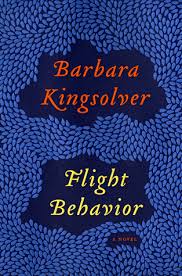
One more.  I cannot look at the cover of Flight Behavior by Barbara Kingsolver without a clutch in my gut and anxiety in my shoulders (see my blog for January 14, 2012, “Queen of America”) but I will work that through and enjoy this book.  I will, I will, I will. 


Monday, February 18, 2013

Tea for a Two Year Old


There are only so many cute grandchild stories that people can listen to graciously, and I'm pretty sure I push the boundaries of that graciousness from time to time, but this is so much more than a story about an adorable little boy.  It's a story about an adorable little boy teaching his Oma a lesson in using resources creatively, following a passion with disregard for the opinion of anyone else, and immersing the senses in what brings joy.  Here we go.

Asaka likes to come down to the laundry room with me to sort clothes, load the machines, and move baskets around, although his work, of course, is to jump on the sorted clothes, push buttons and twist dials at random and play race cars with the baskets.  Another of his delights during laundry time is to pull out the boxes of tea that I keep under the microwave.  He enjoys taking the teabags out of the boxes, sorting them, and choosing one for me to brew.  Well, a few days ago he decided to expand on that game and asked me for a basket.  Into the basket went all of the tea bags - 4 big boxes worth.  That's fine, no problem, but when he asked to take them upstairs to his work table so he could do a project, I began to suspect we were in for an altogether new activity.  My Montessori heart told me  to watch, provide what he needs, and see what happens.

He took the basket of teabags right over to his table, clearly having a specific idea in mind.  He fetched his scissors from his supply drawer, got a bowl from the kitchen cabinet, and set to work opening the foil bag that housed one of the teabags.  His scissors are made especially for little hands and are spring-loaded for ease of use, but this task was still a bit outside his current skill level.  Not to worry.  He furrowed his brow, chewed on his tongue, and doubled down.  In a few minutes he had pried the foil bag open, snipped open the teabag, and emptied the contents into his bowl.  "Look Oma!"  he beamed, "I made some tea for you!"

The next bag gave him more trouble and after a while he got a little discouraged.  When he asked me for help I simply sat at his table with him, baby sister on my lap, and told him I would watch while he tried it again.  He did try it again.  He wrestled with that bag, snip by snip, until it, too, opened!  He dumped it out, and reached for another bag.

This is the point at which I had to make a decision.  Was I really going to let him "waste" so much of my tea?  Would I call it "waste" if he filled up a drawing pad of paper?  Would it be "waste" if I spent an equivalent amount of money on a new toy that he would likely play with only for a short time?  What would Maria Montessori do?  She would, I knew, stand back and let this small child proceed with this important work.  He had invented his work, he had gathered his materials, he had designed his procedure and was carrying it out with concentration and intentionality.  This is the stuff of great learners and thinkers.  Who am I to interfere?

Nearly two hours later - yes, two hours  later, he was finished.  Every teabag had been painstakingly cut open (scissor skills growing stronger with each one), and dumped into the bowl.  As he worked he cleaned up the papers and put them in the trash, running to this task with enthusiasm.  When he spilled on the floor he asked for the broom.  This was serious business and he was not about to make a mess of it.  The room was filled with the aroma of ginger and green tea, Sleepytime and chamomile.  And Asaka, that dear child, had the look of a little one who had just ascended to another plane of existence.  Calm, deep, joy.


Because the bowl was so full, the contents spilled easily when he put his hand in it, so I gave him a plastic box and a spoon so he could transfer some of it over (another classic Montessori task).  He then began to draw designs in the tea, shaking it clear, drawing more, so immersed in this new activity that he hardly noticed as I fed him bites of lunch.  He was exhausted, but still driven.  When he finally came up for air, I had to carry him up the stairs to naptime, and he was asleep in under 30 seconds.

Mihaly Csikszentmihalyi has a book that's been around for quite a while now. I don't think I have a copy anymore, but I'd like to read it again. Here is a bit about it from Wikipedia:

In his seminal work, Flow: The Psychology of Optimal Experience, Csíkszentmihályi outlines his theory that people are happiest when they are in a state of flow— a state of concentration or complete absorption with the activity at hand and the situation. It is a state in which people are so involved in an activity that nothing else seems to matter. The idea of flow is identical to the feeling of being in the zone or in the groove. The flow state is an optimal state of intrinsic motivation, where the person is fully immersed in what he is doing. This is a feeling everyone has at times, characterized by a feeling of great absorption, engagement, fulfillment, and skill—and during which temporal concerns (time, food, ego-self, etc.) are typically ignored.

 Asaka has challenged me to spend more time finding my own "flow."  That's a tall order in these days of caring for small children, but a lesson like this is hard to ignore.  I'll probably need to begin by buying more tea, brewing a cup, and contemplating what will take me to that blissful place.


Sunday, February 10, 2013

Love Trumps Doctrine

How do we ponder the differences that separate people of faith so widely?  How do I think about people whose religious attitudes I find so frightening, particularly when they claim the same religion that I do?  It seems easier to know how to think about explicit evil than about evil that calls itself Christ-like. . .

Dwight and I have a Sunday morning habit of making coffee and bringing a big mug of it back to bed at 7am while we listen to a favorite public radio show, On Being with Krista Tippett, (www.onbeing.org - I highly recommend it).  Ms. Tippett interviews an incredible variety of people who have something fascinating to add to the conversation about the role of faith in our lives.  This morning she aired a conversation she had with Vincent Harding, a leader in the American Civil Rights Movement.  These days he is an elder who spends his time putting young people in touch with other Civil Rights Era elders, encouraging them to be "signposts" in the darkness of racism and other bigotry.  He had so many things to say that I will be pondering them for days, but one thought keeps popping up.  "Love," he said, "trumps doctrine."  Love trumps doctrine.  In other words, realize that differences are there and but let God's love bring it all together.

The civil rights leader wrote speeches for Martin Luther King Jr. and was one of his closest friends. Vincent Harding is teaching new generations about the lessons of that time — and how those lessons can repair divisions in America today. He finds hope in young people today and says they are his answer to the question that drives him: "Is America possible?"


A couple of days ago I read this story in the Washington Post:
(for the full story go to http://www.washingtonpost.com and do a search for Missouri Synod, February 7)

NEW YORK — A conservative Lutheran group has reprimanded a Newtown, Conn., pastor for participating in an interfaith vigil after the Sandy Hook massacre.  The Lutheran Church-Missouri Synod said the Rev. Rob Morris of Christ the King Lutheran Church inadvertently gave the impression he condoned joint worship by offering the benediction at a Dec. 16 event with other religious leaders for the elementary school shooting victims.

The church constitution bars clergy from praying with representatives from other religions, including some other Lutheran groups, for fear of giving the appearance that theological differences about salvation and other doctrines aren’t significant.  The vigil included Christian, Jewish, Muslim and Baha’i leaders. President Barack Obama and Connecticut Gov. Dannel Malloy attended.

What trumps here?  Does this church value it's exclusivity over the need to love each other through this community's horror?  I am trying to imagine how to see this from the Missouri Synod's point of view, but have not yet been able to glimpse what they must see clearly.


Another story.  This morning in church, as part of the service, our pastor officiated at a brief and poignant ceremony which married two women.  These women had a commitment ceremony eleven years ago, and only now, after the State of Maryland legalized same-sex marriage, can they have all the rights that other married couples enjoy.  There was much joyful weeping and celebration, with one church member noting how fantastic it is that a generation of children is being raised to know that love is open to all people.  I was struck by the similarity of the wedding service to the stories I've heard about my own grandparents wedding.  My understanding is that Anna Harder and Frank Plett were married on a Sunday morning as part of the church service, as was the custom in the early part of the 20th century in Mennonite communities.  Just as it did this morning, a church meal followed to bless the new couple.

Others will disagree, and indeed, other Mennonite churches have disagreed vehemently on the issue of same-sex marriage.  Yet this morning, Love held the trump card.  More than doctrine, more than differences, more than what makes some uncomfortable and fills others with peace, Love was there.
HMC
www.hyattsvillemennonite.org

Perhaps what I'll do is spend less time pondering the differences where love seems absent, and spend more time pondering the places where love shines through.  Most of us, I want to believe, will gladly pray with others of any faith, or no faith at all, when our hearts are broken, and many of us will add our blessing to love in all of its manifestations.

Sunday, February 3, 2013

Groundhog's Day

Traditions are those wonderful practices passed down from one generation to the next, helping to define and transmit a common culture. Often filled with meaning beyond what we understand, traditions have deep meaning and offer us a way to punctuate the seasons, our history, religious events, our rites of passage, our personal milestones.  Sometimes they come from deep in the past, sometimes we observe them to honor an elder, and sometimes, as in the case of Groundhog's Day in our family, a child has led us.

On a balmy early February day in Central California, 28 years ago, a four year old girl named Emily was riding her pink bike with training wheels on the sidewalk in front of her house, pigtails flying, as her parents worked in the yard.  Emily had been learning about Groundhog's Day at Montessori School and the mystery and wonder of that furry prognosticator was filling her mind.  She was a child who thought deeply about such things, and there was much to think about:  shadows and light, winter sleep and spring wakening, early blooms and deepening cold.  Her heart continued to fill and finally she asked her mother for permission to do something about these thoughts, something surprising and outside what was usual for her reserved personality.  Emily wanted to ask the neighbors, many of whom were out in their yards enjoying the weather, how they were going to celebrate Groundhog's Day.  Certainly, she reasoned, people were going to celebrate!  The story of the Groundhog was magical, and coming close on the heels of Christmas, Emily understood that great events required ritual and special marking, usually singing and food.

Yes, said her mother, you may ride your bike up and down the block and ask our neighbors what they planned to do for Groundhog's Day.  A mother will gladly hold her own heart outside of her body to keep her child's heart warm and beating inside the protected space of her bone and muscle.  And so Emily's mother watched as the little girl, dressed in matching pink and gray fleece pants and hoodie, bravely approached Ralph, the crotchety old man with the big heart next door; Mrs. Sorenson, the kind woman who was the first and only owner of her home, built in 1930;  Yuriko, the neighbor who was the least scary because she spoke with an accent just like Emily's Grandma Suzy's; and others, all out enjoying the sunshine and each other.

It only took a few minutes for Emily to return home, confused and a little teary-eyed.  The result of her survey was improbable and disorienting - nobody had plans to mark the day.  Not one neighbor could tell her about plans to celebrate!

Now, imagine a precious little face, full of concerned expectation, looking up and asking what our family plans to do, when the rest of the known world plans to do nothing at all?  What were we going to do about Groundhog's Day?

Well, honey, the obvious answer is that we will bake the best chocolate cake ever, a cake that will be worthy of the occasion, a cake that will be decorated with symbols of February 2nd,  a cake that will leave us satisfied that the Groundhog has been honored.

We gathered a collection of small plastic animals from Emily's playthings, including one that we designated as the Groundhog (it may actually be a beaver, but I won't commit to it), baked that cake and ate it with joy as we retold the tale of the creature who came out to see its shadow - or not.

And every year since that year, that particular recipe for chocolate cake has been used on Groundhog's Day, and only on Groundhog's Day, with the same animals to decorate it.  Even in college and law school when Emily was away from home, she corralled her friends into the ritual.

And yesterday, February 2, 2013, we did it again.  This time, the enchanted child was a blue-eyed little boy who, like his mother, thought the Groundhog was magic, indeed.

Decorating the Groundhog Cake
Eating it is the best part!


Aric and Kiyoko join the fun